Load-Bearing Wall Removal in York Region: What Homeowners Should Know
Removing a load-bearing wall is a significant structural change and should never be treated like a simple demolition project. In York Region, many homes were built with interior walls that play an essential role in supporting upper floors or roof structures. Before moving forward, homeowners should understand what’s involved and why proper planning matters.
1. What a Load-Bearing Wall Actually Does
A load-bearing wall supports the weight of the structure above it and transfers that load down to the foundation. It may carry floor joists, roof framing, or even additional walls from the second level.
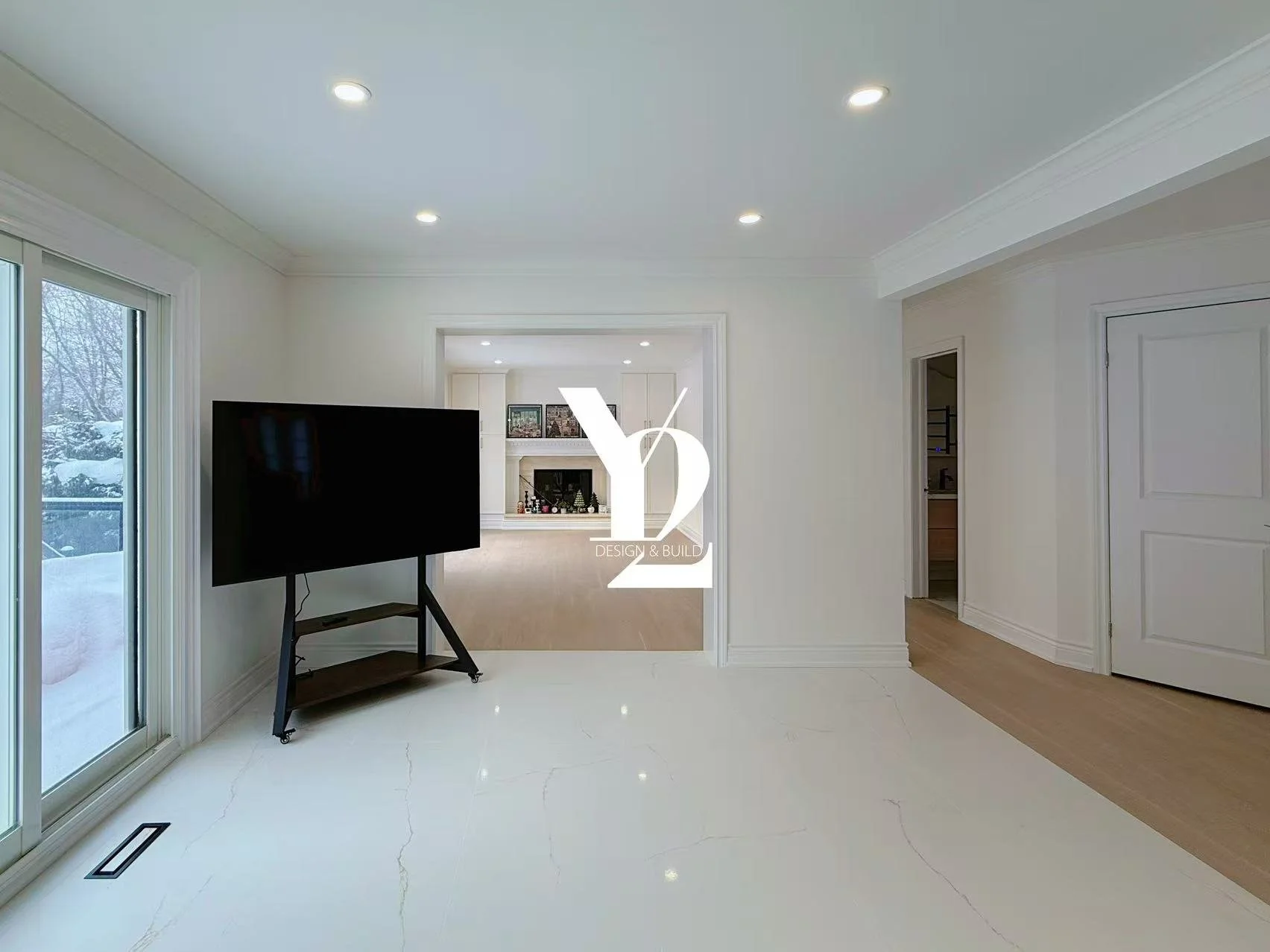
After
Removing it without proper reinforcement can cause structural movement, uneven floors, or visible cracking over time. Determining whether a wall is load-bearing requires reviewing the framing layout and structural direction — it’s not something that can be confirmed by guesswork.
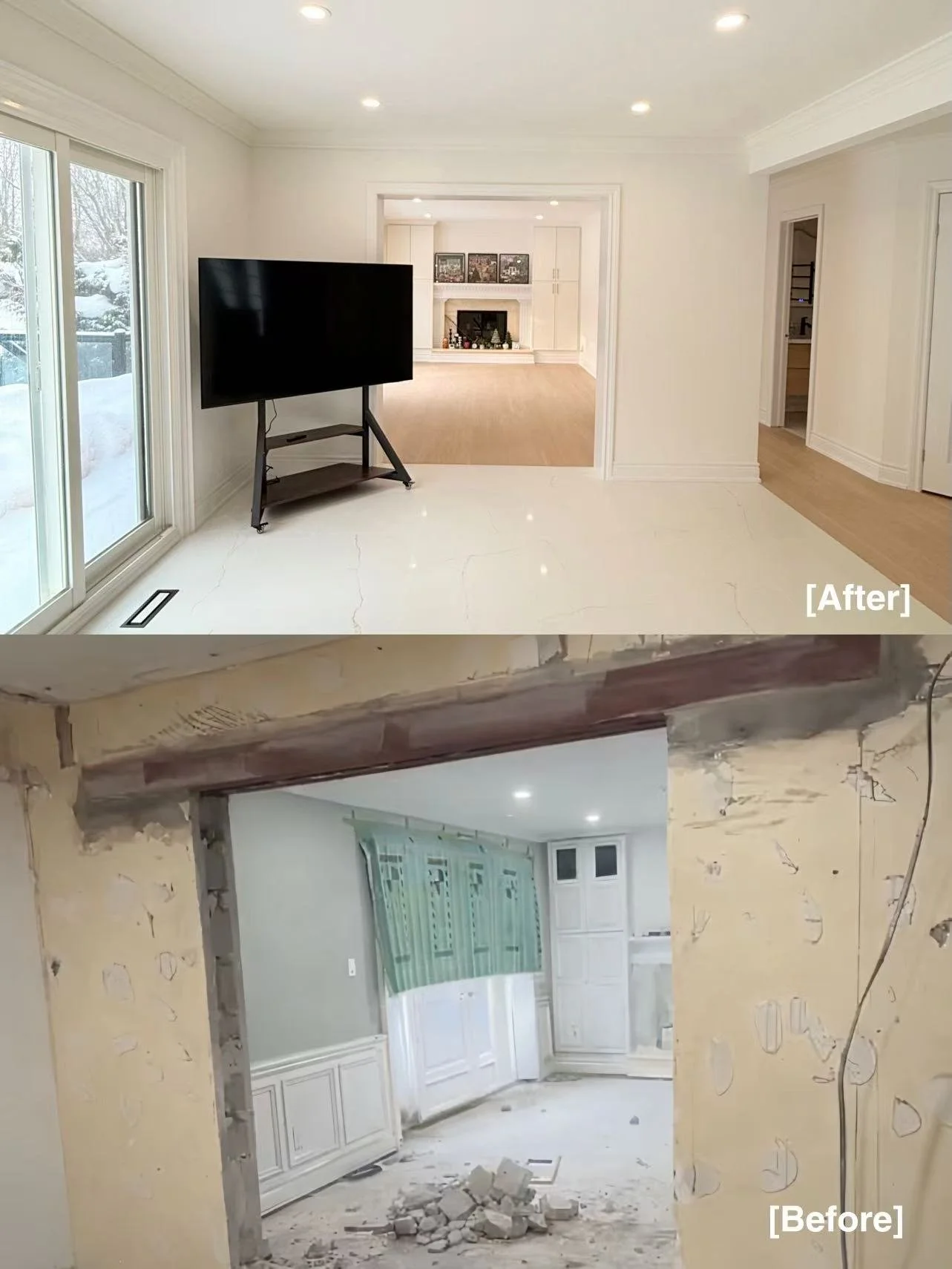
Before v.s. After
2. A Structural Engineer Is Required
Before any work begins, a structural engineer must assess the space and calculate how the load will be redistributed once the wall is removed. This includes specifying the correct beam size and material, whether steel or engineered wood, and identifying if additional posts or foundation support are needed. Proper engineering ensures the home remains safe, stable, and fully compliant with Ontario building standards.
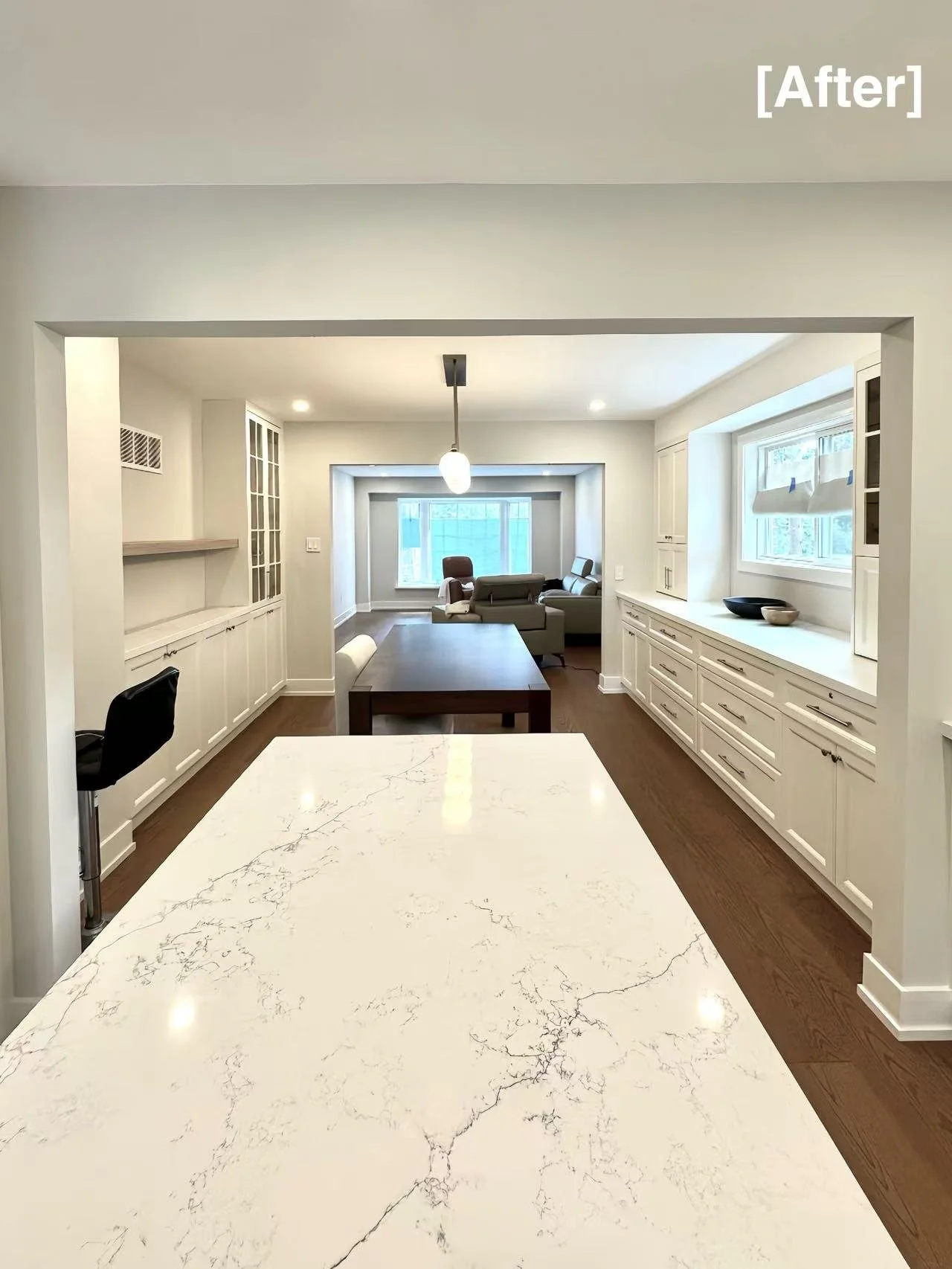
After
3. Permits and Code Compliance
In most municipalities within York Region, removing a load-bearing wall requires a building permit. Engineering drawings must be submitted and approved before construction begins, and inspections are typically required during the process. Having proper permits not only protects the homeowner legally but also provides documentation that can be important during resale or insurance review.
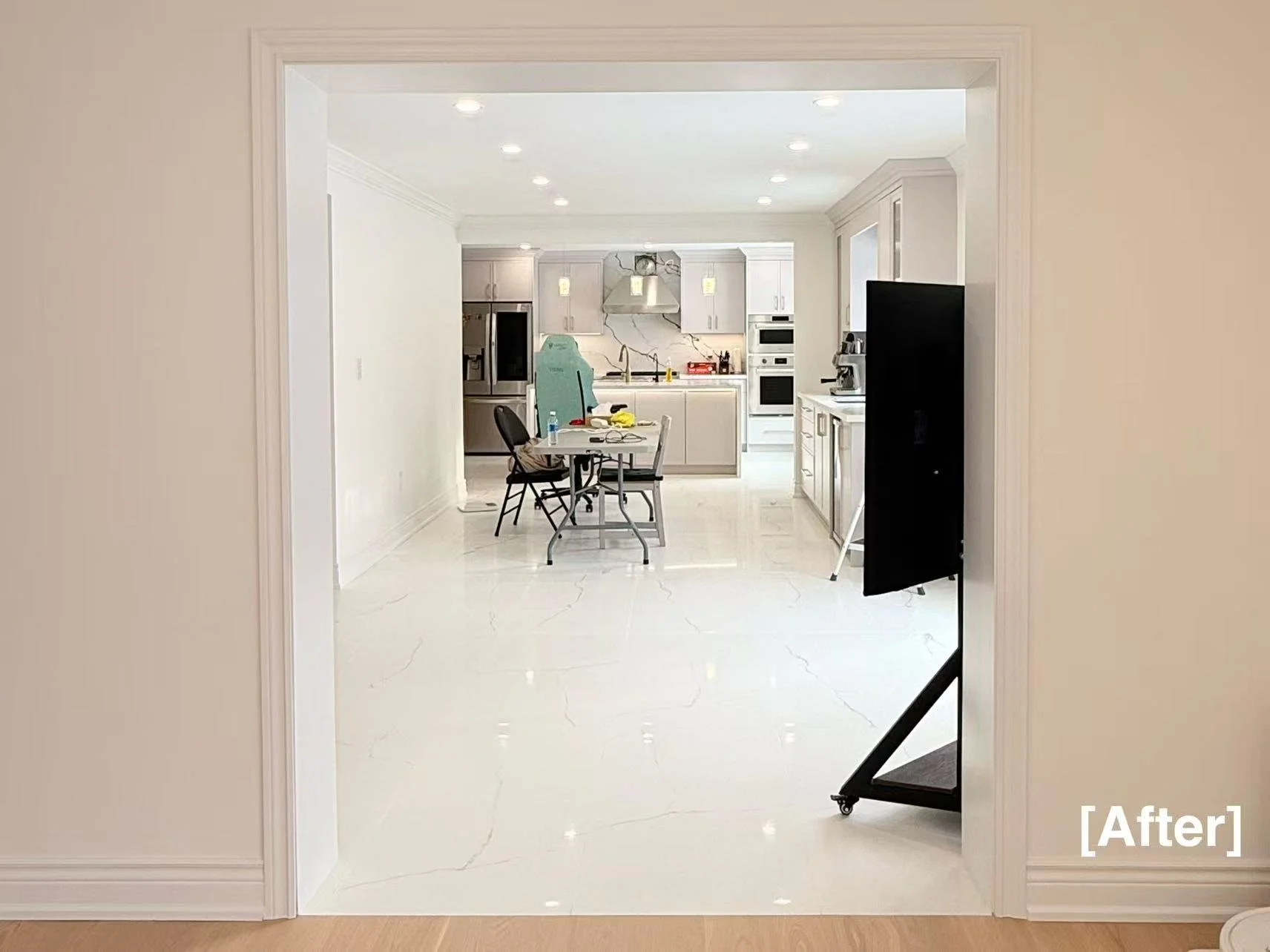
After
4. The Construction Process
Removing a structural wall is done in stages. Temporary supports are installed first to safely carry the load. Once secured, the existing framing is carefully removed, and the new beam and supports are installed according to the engineer’s specifications. In many cases, electrical wiring, HVAC ducts, or plumbing lines inside the wall must also be adjusted. The sequencing of each step is critical to maintaining structural integrity throughout the project.
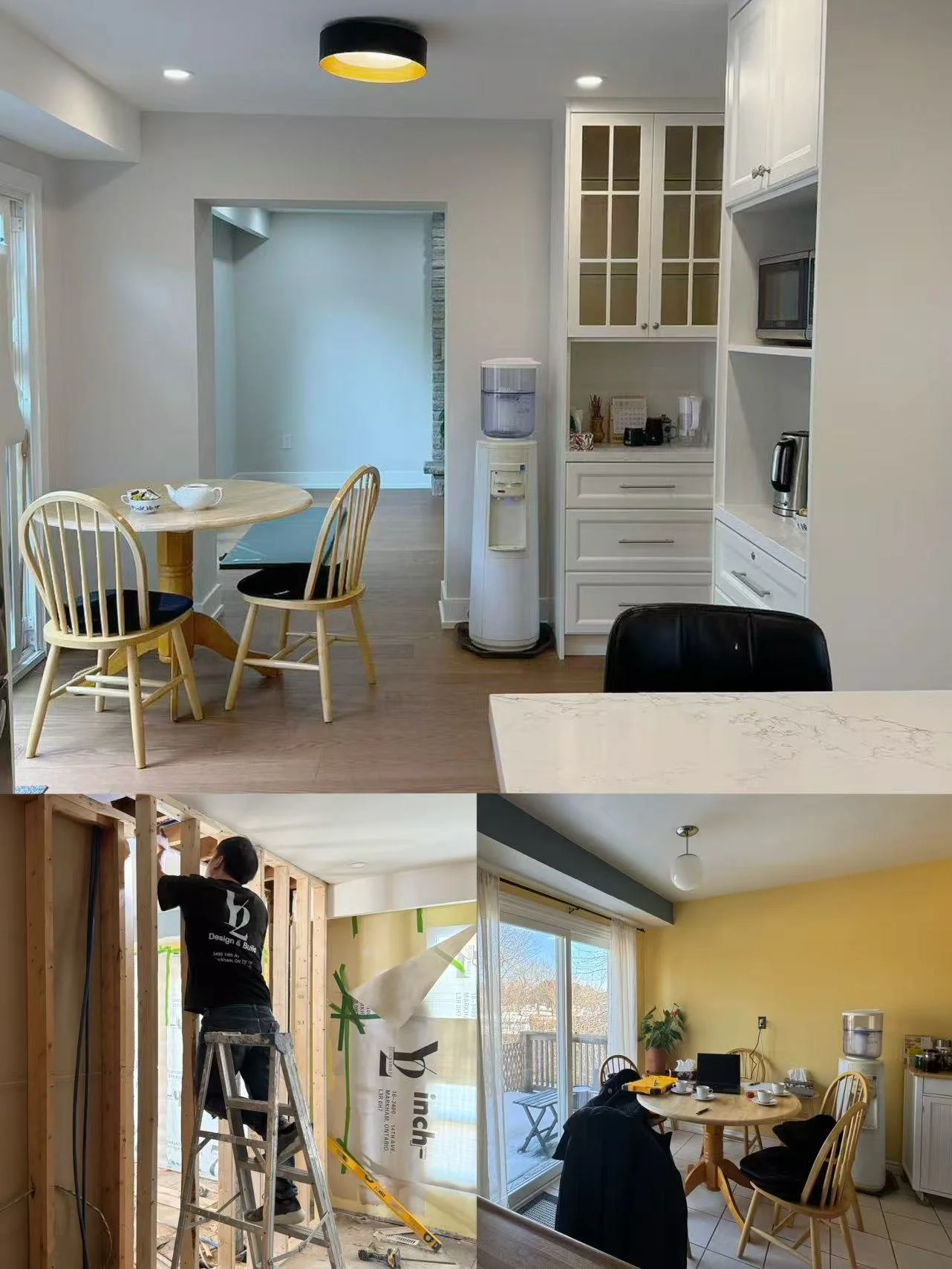
During - Our Wonderful Team
5. Why Choose a Professional Contractor
Load-bearing wall removal involves structural engineering, permitting, and precise construction. It requires coordination between engineers, inspectors, and experienced trades.
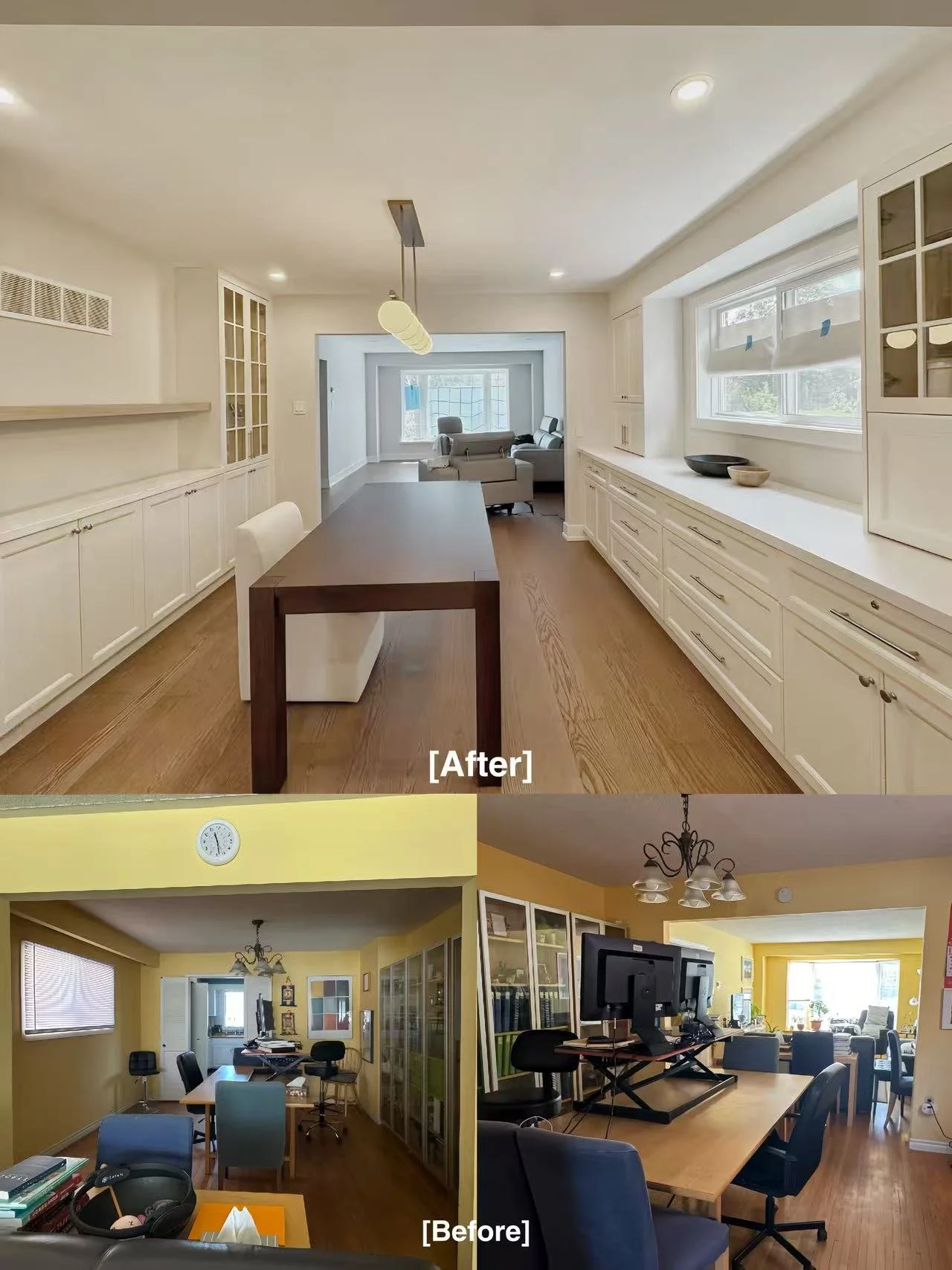
Before v.s. After
Working with a professional contractor ensures that the assessment is accurate, the proper permits are secured, and the installation is completed according to approved structural plans.
Most importantly, it provides peace of mind. Structural modifications affect the long-term safety and value of your home, so it’s essential that the work is done correctly the first time.